
Have you ever wondered what the most powerful computer in the world looks like? It is not the laptop on your desk or the smartphone in your pocket. It is a supercomputer — a machine so powerful that it can perform billions of calculations every single second, solve problems that would take a regular computer thousands of years, and change the world in ways most of us cannot even imagine.
From predicting tomorrow’s weather to designing life-saving medicines, from cracking secret codes to simulating nuclear explosions without actually setting one off — supercomputers are at the heart of the most important scientific and technological breakthroughs of our time.
In this complete guide, we will explain everything about supercomputers in simple, easy-to-understand English. Whether you are a student preparing for exams, a job seeker getting ready for interviews, or just a curious person who wants to understand technology better — this article has everything you need. Let us get started.
What Is a Supercomputer?
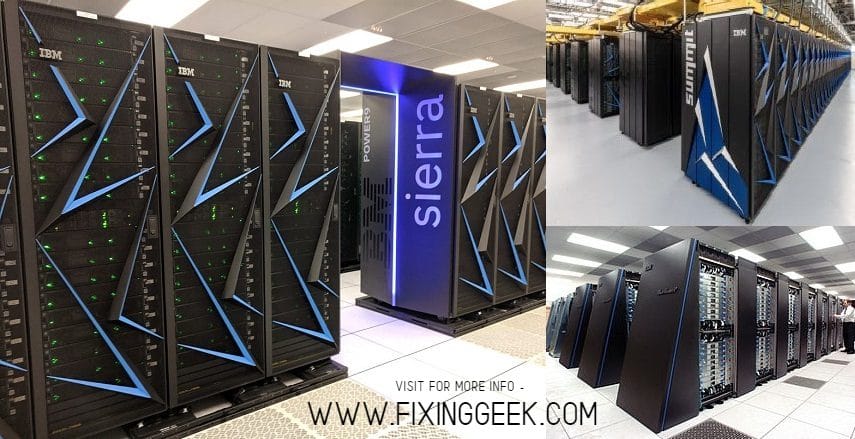
A supercomputer is the most powerful, fastest, and most expensive type of computer in existence. It is designed to perform extremely complex calculations and process massive amounts of data at incredible speeds — far beyond what any regular computer, laptop, or even a room full of computers could achieve.
In simple words: a supercomputer is like a regular computer but millions or even billions of times more powerful. While your laptop can do a few billion simple operations per second, a modern supercomputer can perform quintillions (that is a 1 followed by 18 zeros!) of operations every second.
Simple definition: Supercomputers are very powerful computers with very large storage capacity that are able to process the most complex tasks at extremely high speeds.
The speed of a supercomputer is measured in FLOPS — Floating Point Operations Per Second. Modern supercomputers operate at the petaflop (quadrillion operations per second) and even exaflop level. To put that in perspective, if every person on Earth did one calculation per second, it would take all of humanity about four years to match what a top supercomputer can do in just one second.
How Does a Supercomputer Work?
A supercomputer works by using the concept of parallel processing. Instead of having just one or two processors like a regular computer, a supercomputer has thousands or even millions of processors working together simultaneously to solve different parts of the same problem at the same time.
Think of it this way: imagine you need to paint a very large wall. One person (regular computer) would take days. But if you had 10,000 people (supercomputer processors) each painting a small section at the same time, the entire wall could be finished in minutes.
Key technical concepts:
- Parallel Processing: Multiple processors working simultaneously on different parts of the same calculation.
- Distributed Computing: The workload is spread across many computers or nodes that work together as one unified system.
- High-Speed Interconnects: Ultra-fast networking connects all the processors so they can communicate almost instantly.
- Specialized Software: Supercomputers use specially designed software that can break problems into smaller pieces and assign them to different processors.
- Cooling Systems: Supercomputers generate enormous amounts of heat and require advanced cooling systems — often using liquid cooling or special air systems.
Key Characteristics of a Supercomputer
Here are the main features that define a supercomputer and set it apart from regular computers:
- Extremely High Speed: Supercomputers operate at speeds measured in petaflops (quadrillions of operations per second). Modern top-end machines operate at exaflop speeds.
- Multiple Processors: A supercomputer can have thousands to millions of processors. The Frontier supercomputer has over 8.7 million processor cores.
- Massive Storage Capacity: Supercomputers have enormous storage — often hundreds of petabytes of data storage capacity.
- Very Large Physical Size: Most supercomputers take up entire rooms or even multiple floors of a building.
- Extremely Expensive: Supercomputers cost millions to hundreds of millions of dollars to build and operate. Running costs alone can be millions of dollars per year.
- Complex Mathematical Operations: They are specially designed for tasks involving complex arithmetic, simulations, and data analysis.
- Linux-Based OS: The majority of supercomputers today run Linux-based operating systems due to Linux’s stability, scalability, and open-source flexibility.
- High Power Consumption: Supercomputers consume enormous amounts of electricity — often as much as a small city.
- Special Cooling Required: They generate massive amounts of heat and require advanced cooling systems to prevent overheating.
Uses of Supercomputers
Supercomputers are used in fields where regular computers simply cannot handle the complexity or scale of the calculations required. Here are the most important uses of supercomputers:
1. Weather Forecasting and Climate Research
Weather prediction requires analyzing billions of data points from satellites, weather stations, ocean sensors, and atmosphere measurements all at the same time. Supercomputers process all this data and run complex models to predict weather patterns hours, days, and even weeks in advance. They are also used for long-term climate change research and modeling.
2. Nuclear Research and Weapons Simulation
Governments use supercomputers to simulate nuclear weapon explosions and test the safety and reliability of nuclear arsenals without actually conducting physical tests. This is critical for national security and for ensuring nuclear safety standards are met.
3. Drug Discovery and Medical Research
Developing a new drug traditionally takes 10-15 years and costs billions of dollars. Supercomputers can simulate how different molecules and compounds interact with human biology, allowing scientists to test thousands of potential drug candidates virtually in a fraction of the time. During the COVID-19 pandemic, supercomputers helped researchers rapidly identify potential vaccines and treatments.
4. Molecular Modeling and Chemistry
Scientists use supercomputers to model the behavior of molecules and atoms at the quantum level. This is used in material science to design new materials, in chemistry to understand chemical reactions, and in biology to understand protein folding — a critical breakthrough in understanding diseases.
5. Oil and Gas Exploration
Energy companies use supercomputers to analyze seismic data and create 3D models of the Earth’s underground structure to find new oil and gas reserves. This process, called seismic imaging, requires processing enormous amounts of data that only a supercomputer can handle efficiently.
6. Artificial Intelligence and Machine Learning
Training large AI models — like the ones behind advanced image recognition, language understanding, and autonomous vehicles — requires processing enormous datasets and running billions of calculations. Supercomputers provide the computational power needed to develop and train cutting-edge AI systems.
7. Aerospace and Engineering Simulations
Before a new airplane, rocket, or car design is physically built, engineers use supercomputers to simulate how it will perform under various conditions. This allows them to test thousands of design variations virtually, saving enormous time and money.
8. Cryptography and Cybersecurity
Supercomputers are used to develop and test encryption algorithms that protect sensitive data. Governments and intelligence agencies also use them for code-breaking and to analyze potential security vulnerabilities.
9. Data Mining and Big Data Analysis
Analyzing massive amounts of data — from financial markets to social media to healthcare records — requires supercomputing power. Banks, research institutions, and technology companies use supercomputers to find patterns and insights hidden in huge datasets.
10. Advanced Physics Research
Physicists use supercomputers to simulate the behavior of subatomic particles, model black holes, study the origins of the universe, and run experiments related to quantum mechanics and relativity — things that are impossible to physically observe directly.
Types of Supercomputers
Supercomputers can be broadly classified based on their architecture and the way they process data:
- Vector Processors: Early supercomputers used a single extremely fast processor designed to handle mathematical vector operations. The Cray-1 (1976) was the most famous vector processor supercomputer.
- Symmetric Multiprocessing (SMP): Multiple processors share the same memory and operating system. They work together on a single task. Used in many mid-range supercomputers.
- Massively Parallel Processing (MPP): Thousands or millions of processors each have their own memory and work independently on assigned parts of a problem. Most modern supercomputers use this architecture.
- Cluster Supercomputers: A group of standard computers (nodes) connected by high-speed networking to work together as a single supercomputer. Very popular today because they can be scaled up easily.
- Grid Computing: Similar to clusters but the computers can be spread across different geographic locations. Used for projects requiring worldwide computing resources.
- GPU-Accelerated Supercomputers: Use Graphics Processing Units (GPUs) alongside traditional CPUs to massively speed up parallel calculations. Most modern supercomputers use GPUs extensively.
Top Supercomputers in the World (2025)
Here is a list of the most powerful and famous supercomputers in the world:
- Frontier (USA): Built by HPE for Oak Ridge National Laboratory. Currently one of the world’s fastest supercomputers, operating at over 1.1 exaflops. First computer to cross the exaflop barrier.
- Aurora (USA): Built by Intel and HPE at Argonne National Laboratory. Designed for AI, scientific research, and national security applications.
- Eagle (Microsoft Azure): A cloud-based supercomputer by Microsoft. Shows the trend toward cloud supercomputing.
- Fugaku (Japan): Built by Fujitsu and RIKEN. Was the world’s fastest supercomputer from 2020-2022. Used for COVID-19 drug research and weather forecasting.
- Summit (USA): Built by IBM for Oak Ridge National Laboratory. Was the world’s fastest from 2018-2020. Used for cancer research, materials science, and climate modeling.
- Sunway TaihuLight (China): Built entirely with Chinese-designed processors. Was world’s fastest in 2016-2017.
- Tianhe-2 (China): Built by China’s National University of Defense Technology. Was world’s fastest multiple times between 2013-2016.
- IBM Roadrunner (USA): First computer to break the petaflop barrier (1 quadrillion operations/second) in 2008. Built by IBM for Los Alamos National Laboratory.
- Cray-1 (USA): The first true supercomputer, built by Seymour Cray in 1976. Became the foundation of modern supercomputing.
- CDC 6600 (USA): The first officially recognized supercomputer, released in 1964 by Control Data Corporation. Designed by Seymour Cray.
Supercomputers in India
India has made significant progress in supercomputing with the National Supercomputing Mission (NSM). Here are the most notable Indian supercomputers:
- Param Shakti: Located at IIT Kharagpur. One of India’s most powerful supercomputers under the NSM program.
- Param Siddhi-AI: Located at C-DAC Pune. Ranked among the top 100 supercomputers in the world when launched.
- Mihir: Operated by the National Centre for Medium Range Weather Forecasting (NCMRWF) for weather and climate prediction.
- Pratyush: India’s first multi-petaflop supercomputer, used for climate and weather research at IITM Pune.
History of Supercomputers
The story of supercomputers is a fascinating journey from room-sized machines to exascale computing giants:
- 1960s — The Beginning: The supercomputer was introduced in the 1960s, developed by Seymour Cray at Control Data Corporation (CDC). The CDC 6600 — released in 1964 — is recognized as the world’s first official supercomputer.
- 1976 — The Cray-1: Seymour Cray founded Cray Research and built the legendary Cray-1 in 1976 — the first commercial supercomputer. It became one of the most successful supercomputers in history.
- 1980s — Expansion: Supercomputing expanded as more institutions and governments began investing. The Cray X-MP was one of the fastest machines of this era.
- 1990s — Massively Parallel Systems: The focus shifted from single powerful processors to connecting many processors together. IBM and Intel became major players.
- 2008 — Petaflop Barrier: IBM’s Roadrunner became the first computer to exceed one petaflop (1 quadrillion operations per second).
- 2011 — Fugaku Plans: Japan’s K Computer became the world’s fastest. IBM’s Blue Gene and Sequoia systems also dominated this era.
- 2022 — Exaflop Era: The Frontier supercomputer at Oak Ridge National Laboratory became the world’s first exascale computer, crossing 1 exaflop (1 quintillion operations per second).
Advantages and Disadvantages of Supercomputers
Advantages
- Incredible Speed: Can perform quadrillions to quintillions of calculations per second. Solves problems in seconds that would take regular computers thousands of years.
- Handles Complex Problems: Can process enormously complex simulations and calculations that no other computer can handle.
- Large Storage Capacity: Stores and processes massive datasets — hundreds of petabytes of data.
- Saves Time and Cost: In fields like drug discovery and engineering, supercomputers dramatically reduce research time and costs.
- Life-Saving Applications: Used in medical research, disaster prediction, and climate modeling — directly contributing to saving human lives.
- Advanced AI Training: Essential for training cutting-edge AI models that power modern technology.
Disadvantages
- Extremely Expensive: Cost hundreds of millions of dollars to build and millions more per year to operate.
- Generates Massive Heat: Produces enormous amounts of heat, requiring complex and costly cooling systems. Can overheat and has a shorter operational lifetime because of this.
- Very Large Physical Size: Takes up entire rooms or buildings — not practical for most organizations.
- High Power Consumption: Consumes enormous amounts of electricity, making them environmentally costly and expensive to run.
- Specialized Expertise Required: Operating and programming a supercomputer requires highly specialized knowledge and skills.
- Not for Everyday Tasks: Completely impractical for regular computing tasks like browsing the internet or writing documents.
Interesting Facts About Supercomputers
Here are some fascinating and important facts about supercomputers — many of these are commonly asked in exams:
- Supercomputers were introduced in the 1960s by Seymour Cray at Control Data Corporation (CDC).
- The first official supercomputer was the CDC 6600, released in 1964.
- The first Cray supercomputer was built in 1976 by Seymour Cray.
- Supercomputers operate with multiple processors — some have millions of processor cores.
- They mainly handle complex arithmetic and mathematical operations.
- Their price is in the range of millions to hundreds of millions of US dollars.
- They take up a huge amount of physical space — entire rooms or buildings.
- Supercomputers can solve bigger problems in a shorter time than any other type of computer.
- They can overheat due to the massive heat they generate, which gives them a shorter operational lifetime.
- The majority of supercomputers today run Linux-based operating systems.
- Single machine supercomputers include the early Cray-1 and Cray X-MP.
- IBM developed the famous Blue Gene and Roadrunner supercomputer systems.
- Fujitsu built Japan’s famous K Computer and Fugaku supercomputer.
- The Frontier supercomputer (2022) was the first to cross the exaflop barrier.
- Supercomputers are used for weather forecasting, drug research, nuclear simulations, and AI training.
- India’s Param Siddhi-AI was ranked among the top 100 supercomputers globally.
- Supercomputer performance is measured in FLOPS — Floating Point Operations Per Second.
- The term ‘supercomputer’ was first used in print by IBM in 1929 — referring to a tabulator machine.
Supercomputer vs Regular Computer vs Mainframe
- Speed: Supercomputer > Mainframe > Regular Computer. A supercomputer is billions to trillions of times faster than a personal computer.
- Cost: Supercomputer (millions-billions $) > Mainframe (millions $) > Regular Computer (hundreds $).
- Size: Supercomputer (entire building) > Mainframe (large room) > Regular Computer (fits on a desk).
- Purpose: Supercomputer — scientific research & complex simulations. Mainframe — large business data processing. Regular Computer — everyday personal use.
- Users: Supercomputers are used by governments, research labs, and universities. Mainframes by banks and large corporations. Regular computers by everyone.
- OS: Most supercomputers run Linux. Mainframes often run specialized OS. Regular computers run Windows, macOS, or Linux.
Related Topics on FixingGeek.com
Want to learn more about computers? Read these helpful guides on FixingGeek:
- Learn about What Is a Computer? — complete beginner guide to computers.
- Read about Mainframe Computer — powerful computers used by large organizations.
- Understand Computer Hardware — all physical components of a computer explained.
- Learn about Storage Devices — HDD, SSD, RAM, ROM and more.
- Explore Input Devices — keyboard, mouse, scanner and more.
- Explore Output Devices — monitor, printer, speakers and more.
- Check Computer Abbreviations — full forms of important computer terms.
- Test yourself with the Computer Basic Quiz — check your knowledge!
Trusted External Resources
- Top500 — Official Supercomputer Rankings — the official list of world’s 500 fastest supercomputers, updated twice a year.
- Frontier Supercomputer — Oak Ridge National Laboratory — official page of the world’s first exascale computer.
Supercomputer — 40 Frequently Asked Questions (FAQ)
Here are 40 most commonly asked questions about supercomputers with short, clear answers:
Q1. What is a supercomputer?
A: A supercomputer is the most powerful, fastest, and most expensive type of computer. It can perform trillions to quintillions of calculations per second.
Q2. Who invented the first supercomputer?
A: Seymour Cray, working at Control Data Corporation (CDC), is credited with creating the first supercomputers in the 1960s.
Q3. What was the first official supercomputer?
A: The CDC 6600 (Control Data Corporation 6600), released in 1964, is recognized as the first official supercomputer.
Q4. When was the first Cray supercomputer built?
A: The first Cray supercomputer (Cray-1) was built in 1976 by Seymour Cray at Cray Research.
Q5. What operating system do most supercomputers use?
A: The majority of supercomputers today run Linux-based operating systems.
Q6. What is FLOPS?
A: FLOPS stands for Floating Point Operations Per Second — the standard measurement of a supercomputer’s speed.
Q7. What is a petaflop?
A: A petaflop is one quadrillion (1,000,000,000,000,000) floating point operations per second. Most modern supercomputers operate at petaflop speeds.
Q8. What is an exaflop?
A: An exaflop is one quintillion (10^18) floating point operations per second. The Frontier supercomputer crossed this barrier in 2022.
Q9. Which was the first computer to break the petaflop barrier?
A: IBM’s Roadrunner supercomputer at Los Alamos National Laboratory was the first to exceed one petaflop in 2008.
Q10. Which is currently the world’s most powerful supercomputer?
A: As of recent rankings, the Frontier supercomputer at Oak Ridge National Laboratory (USA) is among the world’s most powerful, operating at over 1.1 exaflops.
Q11. What is parallel processing?
A: Parallel processing is when multiple processors work simultaneously on different parts of the same problem to solve it much faster.
Q12. Why do supercomputers use Linux?
A: Linux is open-source, highly customizable, stable, and scalable — ideal for managing thousands of processors simultaneously.
Q13. How much does a supercomputer cost?
A: Supercomputers cost from tens of millions to hundreds of millions of dollars to build. Running costs add millions more per year.
Q14. How big is a supercomputer?
A: Most supercomputers take up entire rooms or even multiple floors of a building.
Q15. Why do supercomputers generate so much heat?
A: Because thousands of processors working at full speed produce enormous amounts of heat as a byproduct of their electrical activity.
Q16. What cooling systems do supercomputers use?
A: Most supercomputers use advanced liquid cooling, chilled water systems, or specialized air cooling to manage heat.
Q17. What is the difference between a supercomputer and a regular computer?
A: A supercomputer is millions to billions of times faster, costs far more, uses thousands of processors, and is designed for complex scientific tasks.
Q18. What is a mainframe computer?
A: A mainframe is a powerful computer used by large organizations for high-volume data processing. It is powerful but not as fast as a supercomputer.
Q19. What is IBM Roadrunner?
A: IBM Roadrunner was a supercomputer at Los Alamos National Laboratory that was the first to break the petaflop barrier in 2008.
Q20. What is IBM Blue Gene?
A: IBM Blue Gene was a series of supercomputers designed by IBM that held the title of world’s fastest several times in the 2000s.
Q21. What is Japan’s Fugaku supercomputer used for?
A: Fugaku was used for COVID-19 research, weather forecasting, climate modeling, and drug discovery. It was the world’s fastest from 2020-2022.
Q22. What is China’s Sunway TaihuLight?
A: Sunway TaihuLight is a Chinese supercomputer that was the world’s fastest in 2016-2017. It uses entirely Chinese-designed processors.
Q23. What is India’s most powerful supercomputer?
A: Param Siddhi-AI at C-DAC Pune is one of India’s most powerful supercomputers. It was ranked among the global top 100 when launched.
Q24. What is the National Supercomputing Mission (NSM)?
A: NSM is India’s government initiative to build a network of powerful supercomputers across major research institutions and universities.
Q25. What is the Cray-1 supercomputer?
A: Cray-1 was the first commercial supercomputer, built by Seymour Cray in 1976. It was a vector processor machine and one of the most successful supercomputers in history.
Q26. Can supercomputers be used for gaming?
A: Yes — supercomputers have extremely advanced graphics capabilities, but using them for gaming would be an enormous waste of resources and money.
Q27. What is computational science?
A: Computational science uses mathematical models and computer simulations to study and solve scientific problems — a primary application of supercomputers.
Q28. What is molecular modeling?
A: Molecular modeling is the process of simulating the behavior of molecules and atoms using computers. Supercomputers make extremely detailed simulations possible.
Q29. What is data mining?
A: Data mining involves analyzing large datasets to find patterns, trends, and useful information. Supercomputers can process massive datasets quickly.
Q30. What is the difference between a supercomputer and a cloud computer?
A: A supercomputer is a physical machine. A cloud computer is a network of remote servers. Cloud computing is increasingly used to provide supercomputer-like power over the internet.
Q31. Are supercomputers used for artificial intelligence?
A: Yes. Supercomputers are extensively used to train large AI models which require processing massive datasets and running billions of calculations.
Q32. What is a GPU-accelerated supercomputer?
A: A supercomputer that uses Graphics Processing Units (GPUs) alongside CPUs to dramatically speed up parallel processing tasks.
Q33. What is the Frontier supercomputer?
A: Frontier is a supercomputer at Oak Ridge National Laboratory, USA. It became the world’s first exascale computer in 2022, surpassing 1.1 exaflops.
Q34. How does a supercomputer help in weather forecasting?
A: It processes billions of data points from satellites and sensors to run complex atmospheric models and predict weather patterns accurately.
Q35. What is nuclear fusion research?
A: It is research aimed at replicating the process that powers the sun — supercomputers model the complex physics involved in fusion reactions.
Q36. What is seismic imaging in oil exploration?
A: It is the process of using seismic waves to map underground rock formations to find oil and gas — supercomputers process the massive amounts of data this generates.
Q37. What is the Top500 list?
A: Top500 is an official project that ranks the 500 most powerful supercomputers in the world, updated twice per year.
Q38. What is a cluster supercomputer?
A: A cluster supercomputer is made up of many standard computers (nodes) connected by high-speed networking to work together as a single powerful system.
Q39. What is MPP in supercomputing?
A: MPP stands for Massively Parallel Processing — an architecture where thousands of processors each have their own memory and work independently on parts of a problem.
Q40. Why is supercomputing important for the future?
A: Supercomputers will power breakthroughs in medicine, climate science, AI, space exploration, and materials science — making them essential tools for solving humanity’s biggest challenges.
Conclusion
Supercomputers are the most extraordinary machines humanity has ever created. They are not just faster computers — they are completely different in scale, architecture, and purpose from anything most of us will ever use. From predicting weather that saves lives to discovering medicines that fight disease to training the artificial intelligence systems that will define our future — supercomputers are at the core of our most important achievements.
In this guide, we covered everything from the basic definition of a supercomputer to its history, how it works, its uses across different industries, the world’s top supercomputers, India’s supercomputing progress, advantages and disadvantages, and 40 FAQ to help you in exams and interviews.
We hope you found this guide easy to understand and genuinely helpful. If you have any questions, feel free to comment below — we are always happy to help. Stay tuned with FixingGeek.com for more simple, useful computer guides. Do not forget to share this article with your friends and classmates!